Sunday, December 8, 2024

Honoring Rio & Tamiko Imamura Part 3

The following is a speech given by Kirk Imamura at the Bench Dedication Ceremony held at the Japanese Friendship Garden & Museum to honor his parents, Rio and Tamiko Imamura, on November 16, 2024.


Friends and colleagues of Rio & Tamiko Imamura. Thank you for being here to celebrate with our families the unveiling of the bench and the plaque in honor of my parents in this peaceful setting.

But first, I would like to thank you for all your well wishes, your letters of support and flowers when my father passed away last July at the age of 93. I can say that my mother very much appreciated hearing from you and she sends her sincere thanks.

Now, I will say upfront that I have never attended any Toastmaster meetings, and I might take up more than three minutes so bear with me.

Let me start with a quote.

“The true meaning of life is to plant trees, under whose shade you do not expect to sit.”
— Nelson Henderson

Beautiful & very fitting, isn’t it? I might modify the last part to, “under whose shade you do not expect to sit or find a bench to sit on.” We will walk over to that bench today.

As I contemplate my own impending retirement, I ask myself, what did I achieve from working all those hours? Did I make a difference? What is my legacy? Ah, the dreaded “L” word. I was lucky enough to spend 16 years in the music industry, interacting with prominent artists. To some of them, legacy was an all-important idea, mostly driven by ego.

Looking back at my own work, I was not seeing a lot that had staying power. I spent a large part of my career in the technology sector, and the march of obsolescence kept pace with Moore’s Law. I worked on products like the Betamax VCR, the television picture tube and the 3.5” floppy disk drives. The younger folks growing up today would not know what any of these things are without looking them up on the internet.

Reflecting upon my father’s life, I realized a few very important lessons. Number 1: Yes, nothing lasts forever, but there are some things that last longer than others. Just look around at this beautiful Japanese Garden. This place opened to the public in 1991 and it continues to be enjoyed by over 300,000 visitors every year. My father was lucky enough to be on the team that brought the very idea of this garden to life, along with many of you in the audience today, and it was made possible with the backing of the late, esteemed Dr. Inamori. The Minato Gakuen, the Japanese language school, is another great example. He worked with many of you here and the school is thriving today. My father was lucky enough to be part of many things bigger than himself.

But it did not end there. After retiring from Kyocera, my father still had the drive to build more. He was one of the founders, along with my mother, in establishing the Kitakyushu English speaking Toastmaster chapter. The chapter is very active with over 50 members and growing. Which leads me to lesson Number 2: you can still achieve great things, even after retirement.

None of these things can be achieved alone. You need help from lots of other people who share the same vision, but first you must find these like-minded people. My father had an uncanny ability to build bridges and connect with people from all over the world through the Toastmasters network. He was not shy about going up to people and starting up a conversation and was always interested in learning about them and their culture. He went beyond that. He kept in touch with almost everyone he met. His address books (plural) were like several phone books and the drafts of his correspondences literally filled his study, and we can attest to that.

Lesson #3, the final lesson was: legacy is not about products or things, stupid. It is about people and institutions, places where people can gather to learn, to enjoy, to appreciate and to socialize, places that have the potential to affect & impact multiple generations of people past, present & future – like this garden and the Minato Gakuen. That is certainly a legacy one can be proud of. My father was able to share in this legacy and he continues to be a source of inspiration for me, especially at the stage of life I am at.

I do want to acknowledge that all the things that my father was involved with could not have been possible without the support and understanding of my mother. She was the enabler, the one who held down the fort, and the one who had to primarily deal with my sister and me. She was also an active participant, getting involved behind the scenes, working with other wives, helping people get acclimated. She was no slouch. She was the Sergeant of Arms for the Toastmaster chapter she helped establish for many years. She achieved Distinguished Toastmaster (DTM) status and became a good speech giver in her own right.

If we are talking legacy, one cannot go without mentioning family. My parents became proud grandparents recently. I would like to introduce the family members who are here today.

So, in summary, I would like to leave you with another quote, this one by Maya Angelou.

“Your legacy is every life you’ve touched.”

That is a legacy worth striving for.

I would like to thank the Board of Directors, the Executive Director and CEO, and staff members of the Japanese Friendship Garden & Museum for maintaining & keeping this magnificent place going. I want to give a special heartfelt thanks to Mike Kawamura for organizing and hosting this event.

Thank you all for coming.

Honoring Rio & Tamiko Imamura Part 2

The following is a speech given by Richard Forsyth at the Bench Dedication Ceremony held at the Japanese Friendship Garden & Museum to honor Rio and Tamiko Imamura on November 16, 2024. Richard Forsyth was the legal advisor to Minato Gakuen for 25 years, legal advisor to Japanese Friendship Garden & Museum for more than 10 years, and founding Chairman of the San Diego World Trade Center.


It is fitting that we find ourselves this morning near the Inamori Pavillion in this beautiful garden. We all know that Dr. Inamori was very generous to San Diego. But, in my mind, one of his most impactful and enduring gits was in bringing Rio Imamura and his wife Tamiko, to San Diego.

I first met Rio in 1986 – during a job interview. He and two others were interviewing me to take the role of outside legal counsel for Minato Gakuen, San Diego’s Japanese elementary and secondary school. I say it was a job interview, but Rio made it immediately clear that there was no pay attached to the position. I was successful in that interview and happily served in that capacity for 25 years. In the years following, I discovered that Rio and Tamiko had arrive in San Diego in the mid-1970’s as a Kyocera executive and became an immediate presence in the Japanese business, educational and cultural communities. Rio played a major role as one of the founders of Minato Gakuen in 1978, and by the mid-1980’s, had become the Chairman of its board.

Let me take a minute to emphasize to you the importance of the decision to start this school, not only for the Japanese business communities of San Diego and Tijuana, but to these cities as a whole. This region was looking to expand its industrial base and this meant attracting foreign investment.

In that era, that meant Japanese investment. The way to secure that investment was to make the region more attractive to Japanese companies and their Japanese employees. There is no better way to do this than to ensure the educational needs of the community are met.

Schools like Minato Gakuen existed elsewhere, nearby in Los Angeles and the Bay Area, but putting Minato Gakuen together in San Diego was a major commitment by Rio and a handful of business colleagues, some in Kyocera, some in other well-known Japanese companies.

I say Rio and other Japanese business leaders – who were likely all men considering the era – but I think it should be stated, that it was without a doubt, Tamiko and other ex-pat wives who were the most important drivers of this movement.

And to state that Rio and his associates founded Minato Gakuen is too simple an expression. Let me take you through the process.

They needed the school to be first accredited and supported by the Japanese Ministry of Education, then form a US nonprofit corporation, next negotiate a significant lease of space from the San Diego Unified School District, hire teachers and staff, and finally convince Japanese parents to send their children to the school. This was a significant undertaking.

Minato offered and still offers classes in Japanese in core subjects every Saturday to elementary and secondary students. Since its founding, thousands of students have attended Minato Gakuen and benefited from its offerings.

Rio was not only there at the founding, but he guided the school for much of the 1980’s and 90’s as its board chairman and later as chairman emeritus. It was in those roles I saw his best work.

For example, Minato, by the mid 1980’s, had outgrown its original facilities and Rio renegotiated and expanded the least of space with the San Diego School District. I recall we encountered some resistance from the district because, as it turns out, something I did not know – most teachers are possessive of their classrooms and do not like them used when they are not present. Rio, always a diplomat, convince those American teachers to accept the lease and open their classrooms. He did that by encouraging the US teachers to attend a session or two of Minato, to meet the Minato teachers and staff, and to become acquainted with Japanese teaching methods. He was always a builder of bridges between cultures.

One of my fondest memories of Rio was in the late ‘80s during Minato’s Sports Day or Undokai. If you do not know, Sports Day, as celebrated in Japanese schools and at Minato, is a day-long event with wonderful athletic competition among the students. During this day, he spoke to virtually everyone in attendance - parent, teacher, and child alike. He inquired about them. He welcomed all and treated them as family. My own family was among those he charmed that day.

I think this typified Rio. He loved people. It did not matter to him if you were a high-ranking Japanese executive sitting on Minato’s board, or if you were a second grader enjoying Sports Day. He cared about you and once you spoke with him, you could tell he cared.

He also cared about San Diego, its diverse communities and this garden as demonstrated by his family’s action here and by his friends who join Kirk and Yukina today.

I want to leave you with one last story. In preparing these remarks, I came across some correspondence I received from Rio, which I think will serve as an inspiration to us all. I found a letter from 1997 – I know many of you received such letters from Rio throughout the years, because he also loved to write.

He and Tamiko were just newly returned to Japan. He was lamenting his lack of accomplishments and energy that year. He went on to write that he had only that year restarted his Chinese language lessons and was back to swimming daily, and he had traveled to the US to hike the Olympic Peninsula and visited six cities in Mexico and four cities in Australia. Rio may have felt disappointed but I have a feeling that Tamiko was probably feeling pretty exhausted.

Kirk and Yukina, thank you for this bench. I plan on using it often, and when I do, I will reflect on Rio, his life, his dedication to San Diego and his lasting legacy.

Honoring Rio & Tamiko Imamura Part 1

In the morning of November 16, 2024, at the Japanese Friendship Garden and Museum in San Diego, California, 20 people gathered to dedicate a bench with a plaque engraved with the words, "In Honor of Rio & Tamiko Imamura." They were there to celebrate the life of the late Rio Imamura and pay tribute to his surviving wife. The family was represented by their son, Kirk, and daughter, Yukina, and her extended family. The rest were friends and colleagues of Rio & Tamiko, from their time working together at Kyocera.

Speeches of remembrance were given and photos were taken. After the ceremony, the family was treated to a full tour of the beautiful garden grounds and even got to feed the Koi.

The bench rests under the shade of a tree, offering a view of a small creek and a cherry tree grove behind it. In the spring, the cherry blossoms will be in full bloom and the view should be breathtaking. Many people will walk by the bench and a few might sit to rest or just take a moment and enjoy the tranquility and beauty.

It was a very memorable event, particularly for the surviving family. The next two posts will feature two speeches given during the ceremony.

Wednesday, July 17, 2024

Rio Imamura has passed away

Hello,

It is with a heavy heart to notify you of the passing of my father, Rio Imamura, this morning at the age of 93. He died peacefully at a hospice in Kitakyushu Japan, near his apartment where he spent the last 20 years enjoying his retirement in active fashion.

Please say a prayer and remember some of the moments you spent with him as we celebrate his life. He is probably already making friends wherever he is now.

I'd like to share a brief account of his journey.

Rio Imamura (1931-2024)

Father, Husband, Grandfather, Great Grandfather, Kyocera Corporate Secretary (retired), Distinguished Toastmaster (DTM)

The oldest of 4 children, Rio was born in Imabari, Shikoku Japan to Takeo and Tomiko Imamura. As the eldest son, he was responsible for gathering food for his family during the hard times of World War II and its aftermath.

Rio studied Economics and English at Osaka University. He had a life-long fascination with Shakespearean plays and told the story of how he would go to the movie theatre to see “Hamlet” just to practice his English by recitIng soliloquies along with the movie.

After college, Rio worked for Yokogawa Electric. He married Tamiko Ide in 1958 and celebrated the birth of both of his children before moving his family to New York City in 1963. After returning to Tokyo in 1969, Rio continued working for Yokogama Electric for another 4 years. In 1973, Rio changed companies to work for Kyocera International Inc., and moved his family to San Diego, California, where he eventually retired in 2004.

Community service minded, Rio helped to establish Minato Gakuen, a San Diego non-profit Japanese Language school dedicated to supplementing education in Japanese language. Rio also had the opportunity to represent his company, and served as a board member to establish the Japanese Friendship Garden at Balboa Park. This garden has grown and matured into a jewel of the park. Through this work, Rio befriended Clara Breed, the head librarian for the San Diego City Library.

After retirement, Rio and his wife Tamiko settled in Kyushu. Rio was instrumental in founding an English-speaking Toastmasters (TM) chapter in Kitakyushu. Rio participated in several international Toastmasters conferences, served as an evaluator at TM competitions, and earned the Distinguished Toastmaster (DTM) title, the highest level of educational achievement in Toastmasters. Rio became TM’s educational & training director, representing all of Japan.

Another project Rio took on in retirement was to translate Joanne Oppenheimer’s book Dear Miss Breed from English to Japanese. Rio believed this work, which chronicled Clara Breed’s efforts to help displaced Japanese-American children sent to internment camps during WWII, was important for Japanese natives (especially children) to discover. He translated, self-published, and promoted this work enthusiastically. Over the years, Rio cultivated many friendships. He shared his travelogues and stories on his Blog…riosloggers-Riodan.blogspot.com.

Rio had an impact on many lives and will be missed by all who knew him. Rio and Tamiko celebrated their 66th wedding anniversary in January 2024.

Rio is survived by his wife Tamiko Imamura, son Kirk Imamura (wife Chieko Imamura) and daughter Yukina Warner (husband Raymond Warner). He is also survived by his grandchildren Raymond Warner IV, Alina Russ (husband Wyatt Russ) and 1-year old Great Granddaughter Jade Russ, as well as his sister-in-law Kiyoko Ide.

Monday, June 10, 2024

Rio Hospitalized

Dear loyal readers & followers of Rio’s blog,

I am Rio’s son and I wanted to provide an update on the condition of my father’s health. Rio was admitted into the hospital on May 10 with aspiration pneumonia. I flew to Japan from the US to watch over him late May and arranged his transfer to a different hospital / hospice on June 6. He is visited regularly by his wife and sister-in-law. He is in good spirits and is communicating (although sometimes it is difficult to make out what his is saying). While I was there, he was able to FaceTime with his daughter, granddaughter, grandson, and great-granddaughter in the US.

Right up until he was hospitalized, he was avidly reading & writing various essays & articles, as he had done for many years since his retirement. He surrounded himself with books, newspaper clippings and interesting articles & tidbits that sparked thoughts and inspired commentary only he can come up with. Many of his musings have ended up on this blog.

Please do not send emails to him directly. He will not be able to access them and you will not get a response. The best thing to do is to direct all messages to me at kirk.imamura@gmail.com with subject line “Message to Rio”. I will try to find a way to get the messages to him.

Thank you for the support and friendship you have shown my father over the years. Kindly remember him in your prayers.

-- Kirk Imamura

Saturday, November 12, 2022

Grilled Sanma, a fall delicacy

Alas,
Autumn wind
Have pity - tell
How a man, alone,
At supper this evening,
Is eating Sanma
Lost in thought

- Song of Sanma by Haruo Sato (1892-1964)

Autumn is often said to increase the appetite particularly when served with Sanma, a typical seasonal fish “Pacific Saury,” silvery-slender like a spearhead about five inches long. Though the Sanma season starts in July, they are mostly caught in autumn due to its spawning season. Large numbers of them travel south along the east coast of Japan to lay their eggs. The later Sanma is caught in autumn, the more flavor and fat you can expect. The seasonality makes them a favorite fish to eat during fall and people look forward to it as the days get shorter and nights cooler.

As Haruo Sato wrote in his poem above, I thought Sanma belonged to us common folk, but today it is seemingly being possessed by the wealthier classes. In October, I enjoyed a Sanma Dinner twice, hoping for another in November.

Usually, Sanma is served grilled with salt along with garlic, lemon, lime or Yuzu and grated Daikon. It may come together with miso soup and some pickles. You will have to deal with a lot of small bones in Sanma, but one gets more skilled as you get older. Sanma is rich in protein and Omega-3 and helps to reduce blood pressure.

Monday, October 24, 2022

Studies in Chemistry

I tried in vain to invite my grandson Raymond Warner IV to Japan this summer who reached the last year of his teens. In 2018, he visited Japan on his high school excursion trip and Tamiko and I met him in Kyoto. We were amazed he was a six-foot tall boy and he was still growing. We had to look up at him. He resembled my son, his uncle Kirk, but even more handsome. I figured once he had a chance to stay in Kitakyushu, he would never be left alone walking by the local girls.

He started attending University of California, San Diego last spring, which pleased me greatly, as it was the city where I left my heart and his mother spent her maiden days. I was also very happy to hear he is pursuing a chemical engineering degree like his sister, Alina, a chemist now working for a Swiss pharmaceutical company in Los Angeles. My invitation to Raymond included an offer for a temporary summer job but he preferred to work in Thousand Oaks from a personal connection. I could not blame him.

The 2022 Nobel Prize in chemistry was awarded jointly to Carolyne R. Bertozzi, Morten Meldal and K. Barry Sharpless “for the development of click chemistry and bioorthogonal chemistry.” I am happy both our grandchildren chose to pursue studies in chemistry.

Tuesday, August 9, 2022

A Marvelous Journey and Lifetime of Memories

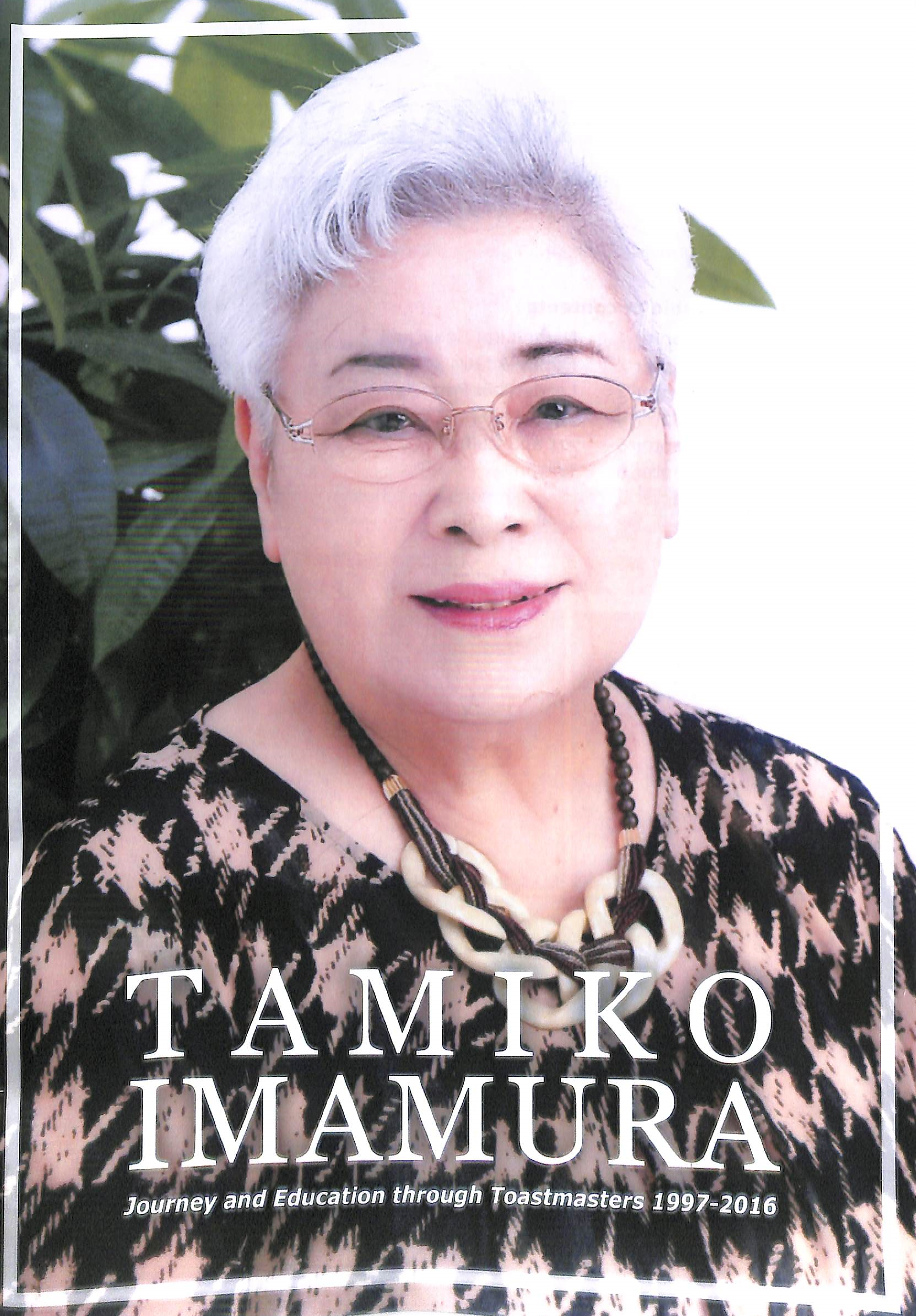
Woo-Hoo! Tamiko made Mt. Fuji at her “Beiju” celebration by publishing her 47-page long life story or portfolio titled: “Tamiko Imamura”.

About a year and half ago, I had collected speeches Tamiko made at Kitakyushu Toastmasters and sent them to our daughter, Yukina Warner, in Santa Barbara, California for editing. I did not hear back from her until this Spring. I received a tiny USB drive from Yukina, saying she consolidated Mom’s speeches into a near 50-page worth of text. Our daughter Yukina had shuffled and edited and made a stunning masterpiece for her mother, Tamiko. Thank you, Yukina, for the wonderful job you did.

It was the greatest of timing since Tamiko was to celebrate her Beiju Anniversary and she did so with fanfare by publishing her life story. “Beiju” or “Yoneju” in Japan comes from the fact that the character “rice” can be broken down into the characters “88”.

She received many positive reactions from her many friends.

Jody Dulin, our friend from San Diego wrote:

"Absolutely beautiful. Such an adventurous life you have led. I have learned throughout the years how very important it was for you to return to Japan. It is incredible that your family has stayed very bonded in spite of distances. Your entire family exudes love. What an example for the world. Sending lots of love and admiration"

Another review came from our Taiwanese friend, Paul Lee who lives in Taichung.

“Thank you very much for showing me your journey and education through Toastmasters 1997-2016. You have enjoyed a diverse and fruitful life.”

The beautiful Rose Bud at the bottom of the post came from Tamiko's friends in Kitakyushu.

Tuesday, June 28, 2022

My Pen Pal in China

It was during the mid-90s, right after I retired and returned from the US (after a 40-year stay) to Japan and started thinking about visiting China next. I was searching for a pen pal to exchange letters and I found one. I wrote to him in Chinese and he wrote back in Japanese, both of us benefiting from writing in our second or third language to brush up.

I became acquainted with Zhu Guanshan, a college student of Jilin University, through the courtesy of a Japanese language teacher heading to the university. Zhu-San and I exchanged letters often, Zhu-San expressing his wish to visit Japan as an exchange student while in college (I believe he made it but I did not get a chance to meet him when he did).

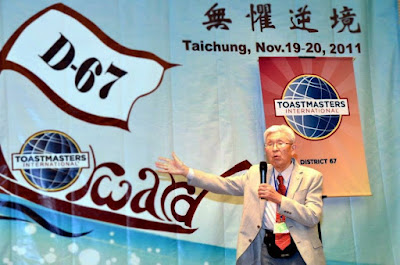
Zhu-san, was hired by a company in Shanghai after graduating from Jilin University. Our correspondence continued as before. I visited Beijing, Kunming, and other places in China, each for over a month in 1996. I also started visiting Taiwan as a Toastmaster around 2000. As a side-note, 2003 was my busiest year, starting with visits to Berlin and the rest of Europe in the spring, followed by the Toastmaster Convention in Atlanta, Georgia and then attending the 20th Anniversary of Minato Japanese Language School in San Diego in November.

Zhu-san luckily found my October calendar clear with his invitation to his wedding. I accepted it thinking the ceremony would take place in Shanghai, an easy location to fly into from Kitakyushu. The ceremony happened to be in Jilin in Northeast China, formerly known as Manchuria. Jilin borders the Heilongjiang Province to the northeast, Russia to the east, North Korea to the southeast, Liaoning to the southwest and Inner Mongolia to the northwest, a most fascinating destination for a tourist.

I politely declined his request. Then he promised to send his friend to meet me at Shenyang Airport and accompany me to Jilin for a 400 km railroad trip. How can I refuse such an offer? I accepted.

To make a long story short, I enjoyed the trip to Jilin and the wedding ceremony with more than a hundred people. I still remember the hard drill of memorizing my congratulatory message in Chinese (text attached).

I am happy to post the latest Zhu San’s family photos he sent me here.

Sunday, May 22, 2022

August 5, 1945: The Day I lost my loving grandparents

Today, May 15, Okinawa marks 50 years since reversion from U.S. rule, inviting Prime Minister Kishida, despite its long-stated hope of becoming a peaceful island free of military bases. It is 87 years after Japan’s unconditional surrender of war by the calamitous two atomic bombs felled on Hiroshima (August 6) and Nagasaki (August 9).

I was 14-years old in 1945, living in “Imabari”, 2nd largest city - facing Seto Inland Sea in Ehime Prefecture. My town is known for quality towel producing mills. My father was just over 40-years old and was drafted into the army. My younger brothers and sister evacuated to an off-shore island where my mother was born. I lived with my grandparents and my mother. I was a student worker and started to work at one of the mills converted into an airplane wing manufacturing plant.

On August 5 around 11PM, 64 Boeing 29 Bombers came (US Op #316, 58th US Squadron) carrying 500-pound M19 incendiary cluster bombs (2,449 pcs) and 56 T4E4 and 32 AR-M64 regular cluster bombs. Incendiary cluster was set to release at 160m and regular at 900m height.

The raids started with 4 parachute flares to defy blackout enforcement kept by Imabari citizens with numberless showers of incendiary bombs. A total of 66 B-29 Bombers took turns dropping incendiary bombs for another two hours. Reported 80% of the city houses perished and was reduced to ashes. 454 persons were dead, including my grandparents, and 150 were heavily injured. Total house loss by fire was 8199. Victims numbered 34,200, including us.

Prior to the heavy air-raids, Imabari had a few minor bomb attacks by Boeing B-29s, including time bombs and rare low flying Grumman fighter machine gun attacks in 1944 and 1945.

My grandparents used to seek shelter at the nearest forested park. We searched for them in vain. They did not return. We concluded that the bomb hit them. Mom and I fled out of the burning streets to the rice paddies, found an irrigation gutter and crouched there breathless until dawn.

All we had were padded hoods. We lost everything. We did not know how to continue living. We were eventually assigned to a barn in a nearby village farm until the end of war.

We heard rumors about a new bomb dropped in Hiroshima but there were no details.

Recently I obtained a copy of the newspaper and saw a photo of an incendiary bomb for the first time. My recollection of the bomb was a metallic sheathed bomb, about less than a meter, uncovered from the ruins after the fire.

In regards to the Boeing B-29 bomber, I learned that my son-in-law’s father Raymond, a Carnegie Tech graduate, was a navigator during World War II. He told me his first assignment was to take a brand-new B-29 to Manila from Texas. It took three stops to the Philippines, including Hawaii. Japan could be reached from Manila. Panhu Islands or Pescadores are the boundaries.

He once took me to one of the old bombers to show where he sat, among the crew of 10 to 12. We became good friends since the wedding ceremony of my daughter and his son. He lived in Riverdale, California. We share our great grandchildren. RIP.

In June 1943, US defeated Japan at the battle of Saipan in the Mariana Islands, leaving Japanese archipelago within reach of the B-29 bombers. We used to look up high 10,000 meters to see them in formation, shining in the blue sky without being challenged. I heard a dozen stories of Japanese fighter planes ramming into them, especially in Kitakyushu and wondered how the small fighter planes could climb so high.

I learned that San Diego, where I spent 20 years, was heavily involved in airplane manufacturing, particularly the Boeing 29s, under Lockheed Martin. Americans produced a total of 18,482 B-29s, possibly in Nebraska, Kansas, Florida, Texas or California. Montgomery Airport in Kearny Mesa may have been a possible production site, the backyard of 3611 Balboa Avenue. My salute to all involved, regardless of enemy or ally.

Monday, March 14, 2022

March 4

"Ladies/Gentlemen, yesterday (March 4), I completed my 91st year and today started my 92nd calendar year. The best birthday message I received was from a woman friend, a Japanese lady and a great skier from Hokkaido, now living in Yokohama. Was it from Yokohama? Nope! It came from the famous Whistler-Blackcomb Mountains Ski Resorts, the 2010 Vancouver Olympic site, via Facebook Messenger. Never thought she would travel across the Pacific and remember my birthday. Messages were coming in from my children in the US as usual but this skier's message was UNEXPECTED and SPECIAL and made my day. I danced with joy with wavering emotion."

I received another half dozen messages from overseas, a number of Taiwan friends, and Facebook friends.

During the New Year this year, Toshiki Kaifu, the 76th and 77th Prime Minister passed away. He was born in January, 1931, and I thought he was the most successful of our generation. During boyhood, he and I shared the same experiences working as mobilized students at the airplane manufacturing plants. Kaifu was at MHI Nagoya and I at Toray-turned MHI near Hiroshima. I learned that he passed a test to become a boyhood pilot, same as I. I regarded him as a fellow comrade who survived the tumultuous Showa war-time era. Kaifu went to Waseda University, majoring in politics and refining his natural gift of oratory eloquence, but immediately took a job as disciple/secretary of Kensho Kono (1910-1958), a Liberal Democrat politician with free three-meal benefits. Kaifu also helped Mrs. Kono win the election (for one term) upon the death of her husband, which helped him cultivate his own political constituency after this endeavor. Kaifu got elected in 1960 as the youngest Dietman in 1960; then during the scandalous 1980s Recruit's Insiders Trading affairs, he was miraculously chosen as the “cleanest” politician to head the Liberal Democratic Party. Kaifu was 58 years old then.

Now here is my story! What I craved for in my teen years, in reflection, was adventure of other worlds. I was born by the sea – exploring the ocean while growing up! - wherever! - you have to work to live! - then, must learn a foreign language and appreciate different cultures - as well as to increase your sales value - chose (major in) English - first got a hard translation job - studied technology commuting to a two-year college on electricity at night. Was "lucky" enough to go on a first overseas trip in 1957 before the official foreign exchange - then a stable job in NYC in the ‘60s, then on to San Diego, California in ‘70s and ‘80s with family - returned to Japan in 1995. Would have stayed living in California except for an agreement with my spouse - my Californian Dreams shattered and broken.

What have I achieved in California? Work life as compared with my comrade Kaifu? In 1989, I was promoted to Corporate Officer of a US Subsidiary of a Japanese company. That's only two years later than Kaifu becoming the Transportation Minister in Prime Minister Takeshita’s cabinet. Not bad, right? I regularly spoke to over 100 plant employees before they started work.

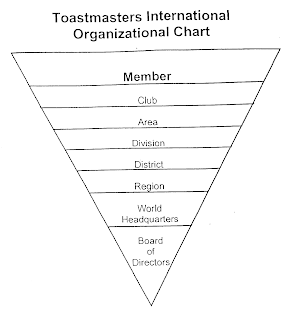
My speech experience helped when I started working on my Toastmaster speeches upon returning to Japan. DTM (Distinguished Toastmaster) Award was consigned to me in 2002, about 5 years after joining the worldwide TM Organization. What I like about TM is that it is a non-profit organization and members are the top tier of the organization, followed by clubs, areas, divisions, districts, regions, headquarters and board of directors (at very bottom) in an inverted organizational chart. You can make as many friends as you like without involving anybody and members are all supportive in achieving excellence, particularly in communication and friendship. TM became my social backbone after retirement. I was reborn and re-established as an ardent TM, traveling all over Japan, Kyushu in particular, in helping TM clubs grow from cradle to being chartered. TM activities became my sense of life fulfillment.

On family life - I am proud my son graduated from University of California, Berkeley with a Master's degree in mechanical engineering and completing the Executive Masters of Business Administration from San Diego State University. He was honored to speak at graduation as valedictorian. My daughter graduated from San Diego State University with a Master's degree in music and she married her classmate who pursued and got his Doctorate. My daughter has given me grandchildren - a granddaughter, now a quality engineer with a chemical engineering degree, and a grandson who is now a freshman at University of California, San Diego. My California Dreams reborn.

Sunday, February 27, 2022

US-Canadian Borders: My Connection

This morning paper surprised me as I was familiar with all the names and locations in the article. It read as follows:

It was about the Canadian borders with the U.S (truckers freedom convoy) in Canada.

The three border crossings are:

  1. Coutts, Alberta, to Sweet Grass, Montana
  2. Emerson, Manitoba, to Pembina, North Dakota
  3. The Ambassador Bridge at Detroit and Windsor, Ontario

First, about the Coutts border. In August 2008, my son-in-law Raymond Warner III (the 3rd) and I attended the Calgary Toastmasters International Convention. On the way to Calgary, I was scheduled to do a presentation at the Japanese Canadian Museum in Burnaby, neighboring Vancouver City, British Columbia, about my Japanese translation of Joanne Oppenheim’s “Dear Miss Breed”. In fact, I was to deliver a dozen translated books to the museum signed by me for the readers gathering there. I thought I had enough time to travel in a rented car, from Vancouver Airport to Burnaby, but an unusual delay at the Canadian customs clearance made my arrival at the museum half an hour late.

I apologized to my audience of 30 people waiting for my arrival. Thankfully, the event went off well.

Raymond and I then drove to Banff (probably my 3rd visit) to the Calgary Toastmasters Convention where TM Kiminari Azuma was representing Japan as a D76 speaker and I wanted to cheer him on.

Raymond's Google direction in 2008 read as follows:

From Calgary, drive down 180 miles south, about 3 miles, take Blackfoot & Deerfoot Trails SE, take Crowsnest Hwy E, Hwy-2 S, Hwy-3E/Red Coat Trail E toward Lethbridge, Card-stone/Fort Macleod, turn right at Hwy 2, now entering US-89.

Coutts is 60 miles southwest of Lethbridge. I was close to Coutts but Raymond and I didn't go through I-15. Raymond wanted to take me on a tour of Glacier, Yellowstone, Grand Teton-Mormon Row, Jackson, Idaho Falls, Craters of the Moon, (almost all are National Parks) before returning the rental car in Boise, Idaho.

I read that Coutts was a town of 250 mostly senior citizens, expanded further at Milk River, previously the site of an RCMP checkpoint. Now Coutts is the busiest port of entry for Alberta and Montana, seeing 800-1200 trucks pass through daily, and is critical to Alberta’s beef and meatpacking industry. The 'truckers freedom convoy' otherwise known as the anti-vaccine mandate protest has prevented hundreds of truckers from transporting their cargo across the Canadian-US border.

Next, about Emerson, Alberta. I visited my Toastmaster friend Rob Duncan in Winnipeg, Manitoba after attending the Toastmaster Chicago Convention in 2000. Rob was stationed in Iizuka City hospital, Fukuoka for a few years (near Kitakyushu). While in Iizuka, he installed Iizuka Toastmasters ahead of Kitakyushu. I wanted to listen to his motivation as well as background.

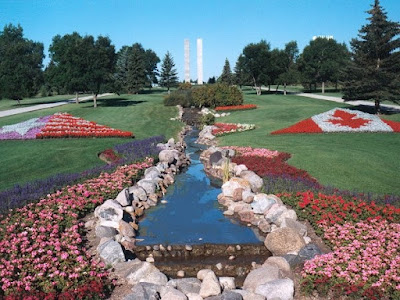
While in Winnipeg, I extended my trip to Regina to visit Verna Mitura, a Canadian friend I met at the Hino English Club. She represented the Canadian Government in agriculture, a career woman. First, I drove from Winnipeg to Regina straight and just saw nothing but wheat fields. So, when returning to Winnipeg, I took the border routes. I recognized Emerson on my return route. There was a huge International Peace Garden, located on the Canadian/American border near Boissevain, Manitoba/Dunseith, N, Dakota, where I spent a lovely afternoon. I traced border routes through Turtle Mountain, etc. and at Emerson/Pembina, drove straight up north back to Winnipeg.

Lastly, about the Ambassador Bridge and Detroit. I didn't see the Ambassador Bridge, but the name sounded familiar. It was Spring 1957. I was a lucky greenhorn fresh from college to accompany two 'big bosses' as their interpreter traveling almost all major US cities. Detroit then was a must-visit city for businessmen and that's where my Fulbright Professor McCormick taught - Wayne U! The doctor marked my English essay 99! When I telephoned, he was so glad to hear from me and invited me to his home for dinner. He told me that Detroit is the only city south of Canada at that crossing.

The article brought forth fond memories of my travels in the US and Canada and the border crossings, particularly with Raymond in particular. I kept Montana travel routings and diaries printed and bound in a booklet formatted by Raymond in my bookshelf.

Wednesday, February 9, 2022

A Gift to Wife - A Trip to El Morro, Puerto Rico

“Imagine the refreshment of finding water after days of dusty travel. A reliable waterhole hidden at the base of a sandstone bluff made El Morro (the headland) a popular campsite for hundreds of years. Here, Ancestral Puebloans, Spanish and American travelers carved over 2,000 signatures, dates, messages, and petroglyphs. Make El Morro National Monument a stopping point on your travels.“

This is the 'catchphrase' of the National Monument of Pueblo, New Mexico. Beside El Morro I introduced in my post on the Pacific Coast, there are quite a few El Morro sites in the US. The one I know well is in the Caribbean, formally called Castillo San Felipe del Morro - the fortification on the corner of the islet of Old San Juan, Puerto Rico, which is celebrating the 500th anniversary of the city's founding as the oldest city in the United States.

Spain ruled the island for about 500 years. England and the Netherlands were two countries to first challenge Spain. England tried three times (1595, 1598, 1797), all in vain, the Netherlands once in 1625. Then the US challenged in 1898 in the Spanish-American War and won.

I was sent to New York City by my employer in March 1963, when my daughter Yukina was only a few weeks old. My family joined me in June of that year.

I worked at 40 Worth Street, downtown, near West Broadway, renting two desks inside a medium-sized (70 employees) trading company dealing primarily in iron and steel chains. Two desks were for me and my partner - Guy Karaki, younger and a dynamic character, an excellent electrical engineer who graduated from Tokyo Denki University in Kanda, Tokyo. Both of us had to walk to the nearby deserted Hudson River warehouse to ship measuring instruments after the “Ima-Ima” (now-now) calibration to fulfill the occasional customer orders. We already knew that Americans use the so-called “all-in-one” multi-purpose testers, disregarding standalone ammeters, voltmeters, wattmeters, or ohm-meters. So, Karaki and I had tactics to sell, with some success, more sophisticated hysteresis tracers (priced at $5,000) to some higher-level institutions.

As the year-end approached, I mentioned to Karaki that we owe everything to our wives who took care of our children in an unfamiliar environment. Can we offer them a trip during the New Year? First, he looked puzzled, but consented. I finally suggested a weeklong trip to San Juan, PR.

I cautioned him the deal was between us. Do not tell anybody about our plans, not even our employers in Tokyo.

We purchased the tickets and provided detailed instructions on where to visit. Off they went. The El Morro in Old San Juan was included in the plan. We babysat the kids. We thanked them in an unorthodox way then and we loved listening to them talk about their trip.

Unfortunately, Mrs. Karaki passed away after returning to Japan and Karaki himself passed away about 10 years ago. RIP to both. Amen.

Sunday, January 16, 2022

New Year Post - Climbing

I am not a climber, as previously stated. However, I am hoping that I could try an easy mountain on a happy occasion such as New Year’s Day or my birthday; taking-it-slow and easy, forgetting how old I am.

I cannot tell when I noticed it, but I was definitely trying to avoid ascending roads, choosing gentle slopes, or even going on a long detour. Before you know it, climbing seems a bit awkward.

Suddenly you are uncertain if you can even climb a smaller mountain - about 500 meters.

Celebrating my 90th Birthday, I wish to put on record my past mountain treks (Scotland and Taiwan) which I partook coming back to Japan from the US in 1994.

I settled down back in Hino City, Tokyo in the house I had newly built with Nippon Homes in 1970 (living room, 3 bedrooms, kitchen, central heating). The house was rented to my employer while I was in the US. I eventually sold it and moved from Tokyo to Kitakyushu in the late 1990’s.

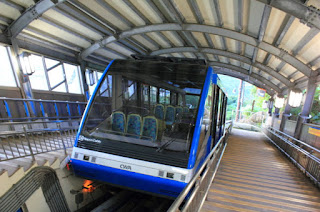
While living in Tokyo, I had a number of chances to climb Mt. Takao (about 500 meters) either on foot or by cable car. Mt. Takao is a very popular mountain in Tokyo.

While also in Tokyo, I started to travel to Taiwan and made many Toastmaster friends, with whom I traveled often to Mt. Yanminshan, Taipei’s suburban national park. Mt. Yanmin and Mt. Takao are very comparable promenades.

I traveled to Scotland alone and trotted two places - one was Ben Navis, the other Glencoe Valley, both in the Highlands, near Port Williams. Ben Nevis is the highest mountain (1300 meters) and I just looked up in awe. Glencoe is the most beautiful glen I've ever seen, and sadly famous for the Glencoe Massacre. Glen is named after the River Coe. I hummed Danny Boy to myself, "from glen to glen and down the mountain side".

In Kitakyushu, about a 500-meter Mt. Sarakura welcomed me. There at Sarakura, meaning "dish warehouse", you can enjoy a Million Dollar view of Yahata City from the summit, in daytime or at night. You can make it to the top either on foot or by cable car.

Sarakura of Kitakyushi reminded me of Mt. Sara-ga-Mine (1,271 meter) in Ehime, my birth prefecture. As a teenager, I was sent there for 3 months for intensive training to learn how to fly a glider. After hundred-days of training, I received an official certification of finishing secondary class glider pilot. During training, the secondary class pilot candidates climbed Mt. Sara-ga-Mine to watch our Primary Class glider instructor take off from the top of Sara-ga-Mine.

Alina, my grand-daughter, married a 'mountain man' two years ago. I was unable to attend her wedding nor have I had a chance to meet him yet because of COVID pandemic. I'll send this blog to him for comment.

Sunday, December 26, 2021

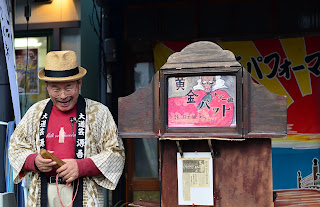
Kamishibai (Paper Theater)

1

The World Kamishibai Day Celebrated its 20th Anniversary on Dec 7, 2021.

My daughter in Santa Barbara, California was surprised to hear about the celebration, claiming Kamishibai a lost art of storytelling. She should remember them from her preschool days in Japan, even though she did not spend much time there. She says she remembers seeing live theatrical performances called “Fairly Tales in the Park”. With a cast of 4-5 actors, this troop performed short plays for children at different parks. They were quite entertaining, dressing up as different characters and using props. It was much different from watching a movie or TV. I believe this performing group surprisingly still exists. I don’t recall ever taking my kids to see Kamishibai. When they were young, I took them to library programs and bookstore events before bookstores disappeared.

Kamishibai, the Japanese paper theater or picture story card show, once flourished during the depression years in the 1930’s that saved many unemployed adults, but disappeared at the advent of World War II. I sensed its revival while living overseas.

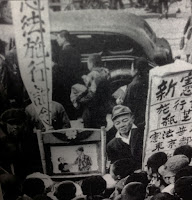
What I recollect about Kamishibai was how it demonstrated its power to communicate when the new Japanese Constitution was promulgated in 1948, using the old medium of popular entertainment to educate. An attentive street crowd was informed about important impending changes. The banner and sign advertised the new constitution coming into effect. The photo attached was taken from the famous book, Embracing Defeat by John Dower. Tokujiro Kanamori (1886-1959), State Minister under Prime Minister Shigeru Yoshida was strongly involved.

The latest World Kamishibai Day initiative promotes the idea that Kamishibai lessons can imprint unforgettable memories in children, invoking the same level of curiosity and enthusiasm from rivaling content on smartphones and tablets.

2

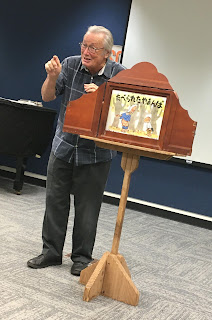
The San Diego Library “Rebellious Miss Breed” retrospective purportedly continues ‘from Sept 2021 to Jan 2022' and its Kamishibai special program was scheduled at the Rancho Bernardo public library on November 19. I asked my friends, the Kaneko family, living nearby, to attend if possible and report back. Kaneko-san attended with her son’s family, including grandchildren aged 8 and 6. To my and their disappointment, no Kamishibai plays related to Miss Breed were performed that day. However, the grandchildren seemed to have enjoyed them all. The following three Kamishibai were performed by Mr. Walter Ritter, the narrator/performer, surrounded by 10 adults and a dozen children that made up the audience.

  1. Taberareta Yamanba, The Mountain Witch that was Eaten
  2. Chinese folk tale
  3. American tale

According to Mr. Ritter, two Kamishibai stories related to Miss Breed are available. I tried looking for a performance date, but could not find any. They are Boy Tetsuzo, about whom I know and talked to person, and Fusa Tsumagari.

3

One of the most well-known original stories that was first performed using Kamishibai was Ogon Bat (The Golden Bat), a Japanese superhero created in 1931. The popular character eventually made the transition to manga and anime adaptations.

Monday, December 13, 2021

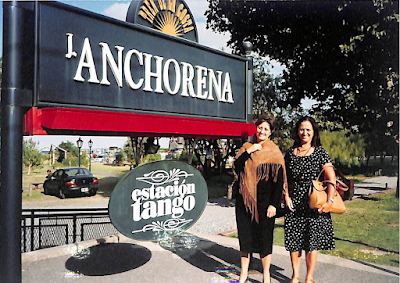
The Tango as Therapy

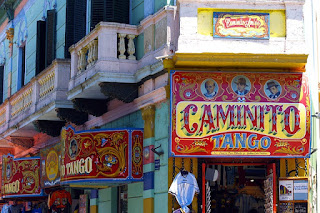
Few visitors to Boca Raton, Florida, known for its affluence, imagined the area means literally 'the rat’s mouth'. This same Boca in Buenos Aires was named to its port by European immigrants. Today "Boca" thrives as "Junior Boca", young soccer teams adorned by local kids. La Boca, however, wears another face there. It is a popular destination for tourists, like me, to visit colorful houses and pedestrian street “Caminito”, where Buenos Aires tango dancers graciously and sensuously perform.

In 2001, I extended my trip to Brazil-Uruguay-Argentine (bordering Iguaz Falls) to Buenos Aires for two reasons: 1) to attend Buenos Aires Toastmasters meeting and; 2) to visit La Boca.

I took special social dancing lessons in my late teen days until I changed my major from economics to English. My favorite lessons were the waltz and the tango. When I heard music like La Cumparcita ("The Carnival", 1917) or Yira-Yira ("Go Round and Round", 1931), I was so exhilarated. I kept my dancing shoes separate from the family show rack. Lo, I haven't danced the Tango for a long time now.

In tango, steps, or rather leg glides, "Caminando" in Spanish, meaning "walking" is non-stereotype. The couple synchronize with the music, you and your partner and the environment. You follow no single specific rhythm. Because the dance is led and followed at the level of individual steps, the variations can occur from one step to another. This allows dancers from one step to the next, to vary the dance from moment to moment to match the music and the mood. I like the tango flexibility.

Another thing, tango lines your two kneecaps close, corrects your carriage, keeping your posture straight. I felt very refreshed, blowing off my stress after Tango dancing. Tango may be good for physical fitness, akin to Judo or Aikido. Strange that Tango has a therapeutic effect, blasting away daily stress. People in La Boca gathered to free themselves from nitty-gritty lives of poverty.

Tango music sprouted around the turn of the century (1900) in Boca neighborhoods. Most well-known was Carlos Gardel, a French-born Argentine singer, songwriter, composer and actor. Initially it seemed he had a tough time initially, even unable to buy Mate tea to drink, but gradually overcame the challenges. He succeeded in performing in New York and was a huge success.

Alas, he met a tragic death when his plane crashed in Medellin, Bogota in 1935.

P.S.
I participated one night in Buenos Aires Toastmasters gathering named Morris Gellman and was welcomed as a speaker from the Orient. I remember I talked about Japan as volcanic islands archipelago. I am happy to report the Club is sound and going strong. Big cheers! I befriended Lidia Cobo, with whom I exchange emails. Below is a photo of the Cobo sisters.

Sunday, December 5, 2021

4215 Trias

I read the obituary of Miss Clara Breed when I was visiting San Diego as a traveler after retiring from Kyocera. I met Clara several times in the late ‘70s at a fundraising board meeting of the San Diego Balboa Park Friendship Garden project, with the Honorable Japanese Consulate General Will Happen Jr. as President, Clara as secretary (requested perhaps by Joe and Liz Yamada) sitting on the Board, and me, representing my employer - Kyocera.

The obituary opened my eyes to her career as the ex-President of San Diego Public Library, and her close associations with the Japanese community, especially with children during the very dark period when they spent their days in concentration camps during World War II.

I wrote "4215" with my felt-tipped pen, followed by "Trias" on the notebook I carried then and it became my Breed notebook ever since. Trias in Mission Hills, San Diego is located a bit north of Fashion Valley on the slope. The neighboring Hillcrest has UCSD Medical Center Complex on the plateau. I frequented the above mentioned Honorable Japanese Consul General Wil Hippen Jr.’s residence close to Presidio Park for various projects which included the Japanese Naval Force band reception on Ports Call.

Losing husband Ruden, a pastor, Clara’s mother Estella arrived in San Diego in the 1920s, invited by Estella’s sister and her husband. Clara graduated from San Diego High as an honor student. Her school activities were diverse - art, horseback riding, tennis and making graduation albums. She made her own miniature house zoo, feeding foxes, raccoons and possums. I assumed early San Diegans enjoyed a life close to nature.

In the obituary, I read Clara kept a boxful of letters from children and when I called Liz Yamada, she already donated them to the Japanese-American National Library (JANL). She introduced me to Tetsuzo Hirasaki for a meeting and I had a valuable conversation with Tetsu (he passed away shortly after we met).

I visited JANL and copied a few letters from children reading “Dear Miss Breed” as samples. I was told the library was in the process of sorting through them and would take at least six months to finish. Joanne Oppenheim, the author of the Dear Miss Breed (Scholastics), miraculously found out about Miss Breed by inquiring at JANL about her Japanese classmate and started interviewing 'Miss Breed's children'. I heard about Joanne’s interviews through Liz and waited until her book came out in 2006.

The Japanese edition of Joanne Oppenheim's book came out in July 2008. Not bad! The translation took me two years (I wish to thank Eisho-no-Kai members for partial translation) and only had to count days needed to find a publisher. Luckily, Kashiwa Shobo in Tokyo came to my rescue.

I have to thank Teiko Uemura as my great self-sacrificing partner. She helped organize the manuscript into a fine, neatly typed Japanese version. I met her at Kumamoto Toastmasters Club and we bonded over sharing a cordial spirit. She later moved to Hachioji, Tokyo but we remain tied in the same spirit.

Latest Honors bestowed upon Clara Breed:

2014: California Library Hall of Fame by California Library Association

2007: San Diego Women Hall of Fame in the Cultural Bridge Builder category

2006: Smithsonian Institute incorporated four of the Dear Miss Breed letters into lesson plans to be used in Business School documents

Wednesday, November 3, 2021

One Hundred-Towered Prague

One Hundred-Towered Prague
by Czech Republic poet Nezval (1900-1958)

One hundred-towered Prague
City with fingers of all the saints
With fingers made for sweating falsely
With fingers from the fire and hail
with a musician’s fingers
with shining fingers of a woman lying on her back.

With fingers of asparagus
with fingers with fevers of 105 degrees
with fingers of frozen forest and with fingers without gloves
with fingers on which a bee has landed
with fingers of blue spruces
With fingers disturbed by arthritis
With fingers of strawberries
With spring water fingers and with finger of bamboo

Reflecting on my limited global travel experience, I wish to strongly recommend to friends - be sure to include Prague if you are planning to go to Europe.

Prague can offer unusually deeper cultural / historical insights than any other European city. I shall say better than Vienna, London, Paris, etc. You can witness old and new architecture; Gothic, Romanesque, Baroque, Rococo, even Art Nouveau and contemporary - castles, churches, monasteries, libraries, museums, gardens and parks. I read and heard comments by visitors to Prague saying that it was as if they were visiting a fairyland.

The above quoted Czech poet Nezval also wrote about the River Vltava running through Prague:

‘Bon voyage, Vltava!' Your bubbly string playing string for us glorious tunes along with harp while the Vysehrad* soaring up in the bright moonlight as if straining its ears to listen to Vltava".
(*Vysehrad - the name of the hill where the Prague castles or fortresses are)

Nobel Laureate poet Jaroslav Seifert also referred to Vltava as his river of hope and faith. And Bedrich Smetana dedicated his first symphonic poem “My Fatherland” (in Japanese) to Prague. The Czech name of this symphony is “The Moldau”, meaning Vltava in German. I enjoyed the Vltava riverboat cruise when I was there.

My favorite Mucha’s artwork are St.Vitus Cathedral’s stained glass windows. I remember there is a colorful area called Golden Lane where it was rumored alchemists transformed lead into gold. In reality, the area was home to the castle’s gunners and goldsmiths, where Franz Kafka once lived. The strangely named “Powder Tower” enchanted me.

I returned often to Wenceslas Square recalling the so-called Prague Spring or Velvet Revolutionary demonstrations. In the Old Town Square, I marveled at the old but still operating astronomical clock and bustling flea market.

My visit to Czech was in the spring of 2005 when I visited the Architectural College named after Jan Leztel (1880-1925), the architect who built the Hiroshima Prefecture Business Exhibition Hall Building. The building itself was destroyed by the Atomic Bomb in 1945 but the dome skeleton has been famously kept as a war memorial, now designated as a UN Heritage site. The college is in Nachod, East Bohemia, a border town to Poland through Krkonose Mountains (see riosloggers 2009).

Monday, October 18, 2021

8611 Balboa Ave, San Diego

A godsend found among my many yellow tinged papers is a checkout receipt dated May 1, 1957 from the Lafayette Hotel and Club, 2223 El Cajon Blvd, San Diego, together with the paper clipped article about the hotel’s renovation. A quote from the newspaper reads, “Built in 1946, Lafayette offers deluxe guest rooms, including one- and two-bedroom suites with fireplaces, libraries, mini-bars and large terraces. The complex surrounds the original 25-meter swimming pool and patio courtyard”. My receipt was for $8 per night.

I don’t know why this Lafayette Hotel, far from downtown San Diego, was chosen by our travel agent. Surely there were many other hotels located closer to San Diego’s Lindbergh Airport. Perhaps their austere choice was influenced by the fact that our trip was sponsored by a Boston company to conclude a technology assistance agreement, and the Japanese Government had yet to liberalize the yen — so Japanese citizens had no access to purchase U.S. dollars.

I had a free Sunday morning to walk around the Lafayette grounds on El Cajon Blvd. Amusingly, the cross-streets on the left were named Mississippi, Alabama and Texas, Arizona on the right. Jacaranda trees along the streets were in full bloom with purple flowers. They looked so beautiful like the Japanese cherry blossoms.

Never had I dreamed that I would live in San Diego for 20 years. When I had a chance to revisit the Lafayette, I was surprised that the hotel had become the local Immigration Bureau. I had to accompany our family there when they arrived.

Another surprise was the Honeywell Building on Balboa Ave., in Kearny Mesa. In 1957, my boss informed me that Honeywell had agreed, in writing, to show us their plant. We went there only to be detained by their on-site security. Why? They show the plant only to customers. Period. Yes, my employer produced some competitive products, but Honeywell also made many products that were not in competition with goods made by my employer. The misunderstanding was cleared up and we walked through the plant only in the areas for non-competitive products.

In 1973, I joined Kyocera at the Kearny Villa Plant in Kearny Mesa, within walking distance of that Honeywell facility. My primary job, in addition to being the plant controller, was to build a new bigger ceramic plant at a 17-acre site, obtained through the San Diego Economic Development Corp, with the help of construction consultants such as Frank Hope & Associates and Nielsen. Critical was solving the high-tension power transmission line issues involving SDG&E professionals, but we got past them and had final blueprints ready for local bidders. The construction teams were elated.

Then out of blue, the 21-acre land, 288,000 square foot plant facility Honeywell Plant I had walked through 15 years ago, went up for sale! Unbelievable! The dilemma now was either to stick to the construction plan or to make a windfall deal? Kyocera’s decision was a wise one – to buy rather than build. “The greater embraces the less” goes the proverb. In short, Kyocera's diversification requirements and Honeywell's cash requirements matched up perfectly. The address of 8611 Balboa Avenue became the US headquarters for Kyocera International.

Kyocera's purchase included taking over the lease for a number of big tenants, including General Dynamics, Rohr, and San Diego County Office, which assisted with Kyocera’s gradual and flexible future expansion. Added to my job was the impossibly “lucky” role of ‘tenant relations.’ I worked for almost 20 years at 8611 Balboa until my retirement.

P.S. I found out that the Lafayette Hotel is still going strong as per Jay Scovie, Kyocera's Corporate Director for Communication & Education. I owe him the link to the hotel website below:
Lafayette Hotel Website

Thursday, September 23, 2021

El Morro

Spaniard sailors called it "El Morro".
A landmark for their navigation,
An awesome rock mound, about 600 ft. tall
Edged on a Pacific Coast beach.

Traveling from the inland San Luis Obispo
It's the last stack bolted in the bay,
One of a linear series of volcanic knobs
Hollister Peak, the closest in the line.

El Morro was exploited as a quarry for some time
by heartless miners
Though disfigured with scars and weather beaten,
It added more dignity and reverence.

Today it is a State and National Estuary
covering the bordering sand dunes and spits,
salt marshes and mudflats.
A sanctuary for birds, plants and sea animals.

I had returned to El Morro a dozen times
Whenever I headed to upper Calif
Whenever I had problems and soothed myself
turning to my favorite destination

I flew over the Pacific Coast
from San Diego to Seattle.
I recognized El Morro from the air
It became a landmark of my life and my careers there.