“According to a Colgate-Palmolive survey, Americans average about 11 minutes in the shower and spend about 20 minutes in a typical bath, hardly time for an in-depth cleaning. The Japanese, who take much longer baths, are certainly far more fastidious than the Americans. But Americans and Japanese are all barbarians by the standards of the Romans, who sweated, soaked and were rubbed, scrubbed and strigiled clean.” (Jay Stuller, quoted from Smithsonian Magazine 1991)
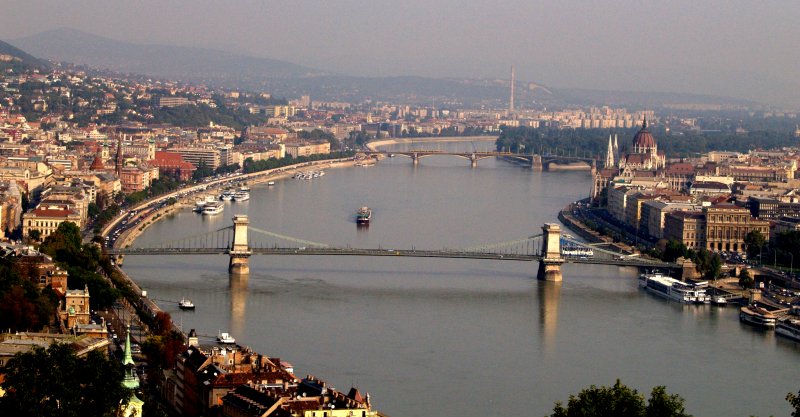
  It was Romans who, in the first century, built the Aquincum in the current Budapest area. The Latin expression "aqua quinque" was the origin of the Aquincum, which means “five waters”. Budapest apparently followed a similar path as the British city Bath, but with much more turbulence because of frequent changes by occupants Romans, Turks, King Matthias Corvinus, Habsburgs, etc. Budapest had over 50 such facilities. Best known are Gellert, Lukacs, Rudas, Szechenyi, with the gorgeous buildings. I read that the geological features of the Carpathian Basin are such that the Earth’s crust is very thin, so water rises easily to the surface. It is not an exaggeration when one says that you could push a stick into the ground anywhere and up would come thermal water.
 Hungary is a land of more than 1,000 hot springs and has enough spa facilities to accommodate 300,000 people at the same time. These spas are located in big cities, Eger, Gyor, Harkány Mako, and Szeged as well as smaller towns throughout the country. Even smaller places like Hévíz, Hajdúszoboszló, Bükkfürdö, and Zalakaros are the destination of not just European tourists but also the locals.
 Lately, I was surprised to see a super modern resort hotel with a huge swimming pool, sauna and spa at Salt Hill Spawil at Egerszalok, northeastern Hungary, 80 kilometers from Budapest near the Slovakian border. A fancy ad is on the Internet written in Japanese. The wellness / fitness spa tourism seems to be booming in Hungary.
 In Japan, there are about 3,000 hot springs and hotels and inns associated with them number over 20,000. However, bathing culture and customs are quite different between Hungary and Japan, so comparison is not easy. For instance, hot springs in Japan is not meant primarily for swimming. But, we certainly share the benefits of medicinal and healing properties the earth made available for us.